

| Name | Avatar: Frontiers of Pandora |
| Engine | Snowdrop Engine |
| Platform | PC, PS5, Xbox Series X|S, Amazon Luna |
| Time | 6 Years |
My contributions
- Collectible system
- Mimetic Interaction system
- Harvesting system
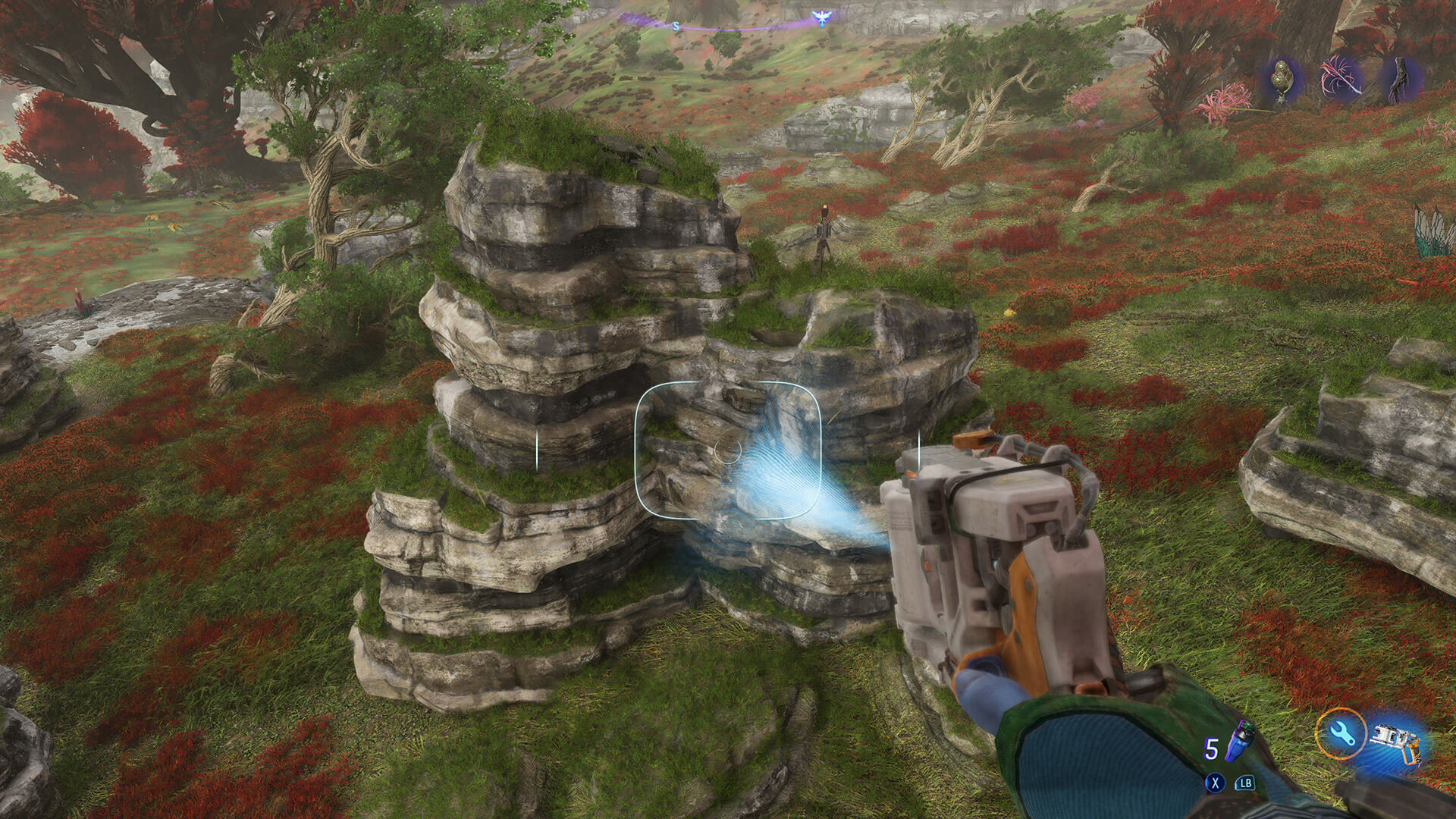
- First-Person Throwables (Setups)
Overview
Role: Game Designer (Feature Owner) – Engine: Snowdrop (Proprietary)
The Challenge
The vision for Avatar required a level of player immersion that standard “press button to interact” mechanics couldn’t provide. I was tasked with owning and defining the Mimetic Interaction system—specifically the harvesting and environmental interaction loops – to make the world of Pandora feel reactive and physical.
Technical Impact and Implementation
- The Gold Standard: I defined and implemented the “Gold Standard” for tactile interactions. This involved a deep collaboration with programmers and animators to move away from canned animations and toward a system where player input directly influenced the physical tension and success of the harvest.
- Snowdrop Logic: I worked natively in the Snowdrop Engine, bridging the gap between systemic design and technical constraints. I managed the logic for how various flora and fauna responded to player proximity and input pressure, ensuring the world felt “alive” rather than static.
- Juice and Feedback: I applied millisecond-level polish to the haptic feedback and visual cues. By refining the timing of the “tension” curves during harvesting, I ensured that players could feel the resistance of the world, creating a meditative yet engaging loop that became a core pillar of the gathering gameplay.
- Cross-Functional Ownership: As the Feature Owner, I led the communication between the UI, Audio, and Animation teams. I ensured that every sensory channel (vibration, sound, and visual UI) was synchronized to reinforce the “Mimetic” feel, resulting in an interaction model that was praised for its unique tactile immersion.
Collectible System Design
I designed the structure and logic behind the game’s collectibles – defining what they are, how they’re distributed across Pandora, and how they communicate ecological and narrative context.
Core principles:
- Ecological placement: Collectibles are distributed according to biome logic. Each region’s flora, fauna, and artifacts reflect its local environment and culture.
- Narrative context: Every collectible is paired with lore, field notes, or environmental cues that connect it to Pandora’s wider story. This allows players to learn through discovery rather than exposition.
- Interaction cadence: Each collection event is an intentional gesture. There are no instant pickups – instead, the player performs a short, tactile action that reinforces presence and respect for the world.
This system transforms collecting into a narrative experience, turning each find into a small act of learning about Pandora’s ecology and cultures.
Mimetic Interaction System

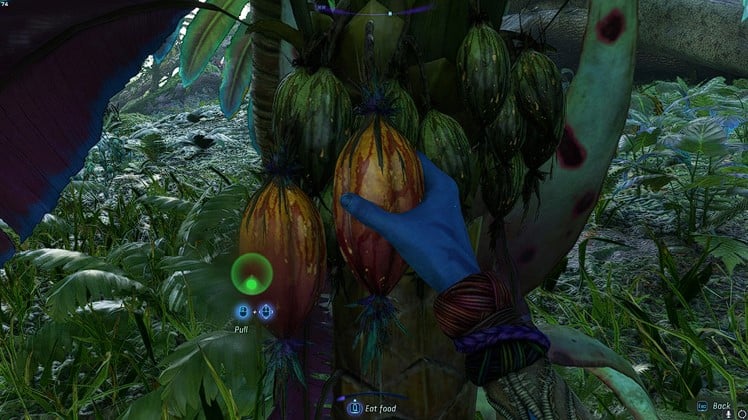
I designed and implemented the mimetic interaction system, which drives how players physically interact with objects in first person.
The system is inspired by James Cameron’s filmmaking approach – particularly his use of touch to anchor characters in the environment. The goal was to replicate that sense of tactility within gameplay, ensuring that the player doesn’t just see Pandora, but handles it.
System design details:
- Contextual interactions: Each interactable type (plant, tool, relic, etc.) triggers a context-specific interaction animation that matches the object’s form and material.
- Material differentiation: Organic and synthetic objects trigger distinct audio-visual feedback — from the flex of a plant stem to the metallic scrape of an RDA container.
- Responsive timing: The duration and pacing of each interaction are tuned to feel deliberate but not intrusive, maintaining rhythm within exploration.
- Unified design language: All tactile interactions — from harvesting to examination — use a consistent input structure and visual framing, creating a coherent first-person experience across the game.
In practice, this was an interaction design system: a shared set of patterns, timing rules and feedback conventions that every tactile action in the game follows. That consistency is what lets a player learn it once and trust it everywhere.
The result is a tactile interaction layer that supports immersion without breaking gameplay flow. Every action, from collecting a sample to examining a relic, reinforces physical connection with the world.
Harvesting Mechanics
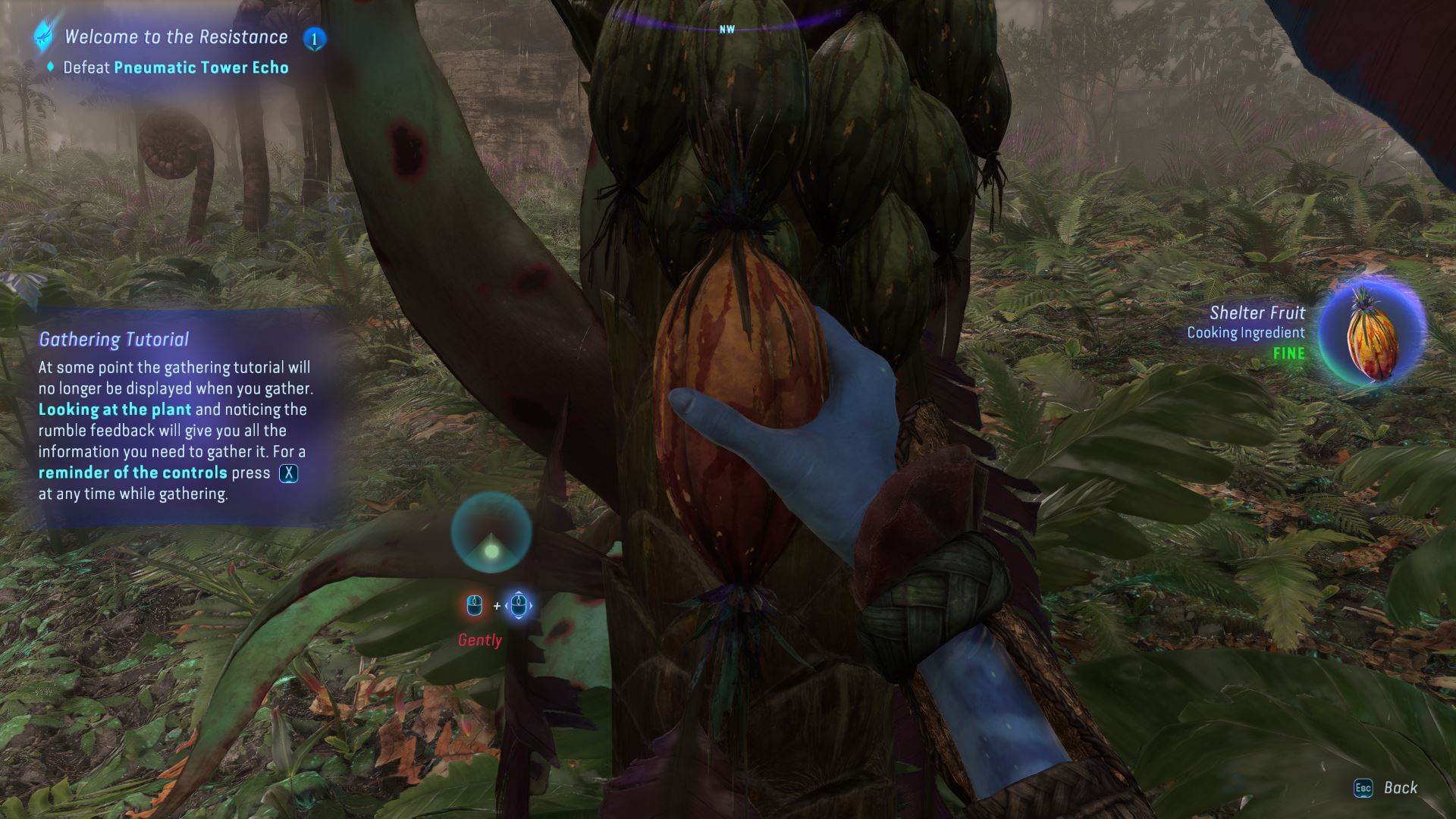
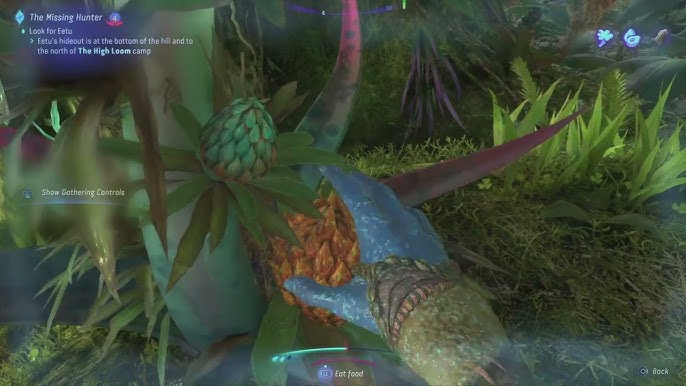
I designed the harvesting system built on top of the mimetic framework. This governs how players gather plants and other resources from the environment.
- Biome-specific variation: Harvestable resources differ between regions and weather states, reflecting Pandora’s ecological logic.
- Player agency: Harvesting interactions require precision and timing — the player actively performs the action, shaping the quality or yield of the resource.
- System integration: Harvested items feed directly into crafting and upgrade systems, connecting tactile interaction to long-term progression.
This system ensures harvesting feels deliberate and physical rather than automated, strengthening the connection between player action and the living world.

First-Person Throwables (Setups)
I created gameplay setups for first-person handling of throwables, establishing how they are aimed and released in play.
This work led to a direct collaboration with Lightstorm Entertainment’s lore team, resulting in the addition of a new Na’vi term – “kirneyt” – meaning grenade (It’s just the word “Grenade”, but the Na’vi language don’t have the “G-sound”).
Outcomes
- A collectible framework that blends environmental storytelling with world logic.
- A tactile interaction system that reinforces presence and connection through touch.
- A harvesting design that links manual input to systemic progression.
- A lore-consistent throwable setup that expanded the Na’vi language and universe canon.